The report titled “In-depth Analysis of Selected Key Events, Multi-dimensional Impact Assessment, and Strategic Trend Forecasts”, prepared by experts from the Vietnam Energy Magazine, is developed based on a qualitative analytical framework combined with quantitative data from reliable sources.
This report dissects in detail the 10 most significant events shaping Vietnam’s energy sector in 2025.
These events were selected not merely based on investment scale or media visibility, but on the structural impact they generate on Vietnam’s energy security, macroeconomic stability, and geopolitical positioning over the coming decade.
1. Overview
The year 2025 is no longer simply a milestone within Vietnam’s power development planning cycle. It has emerged as a historic inflection point for the country’s energy structure.
Aggregated data from market developments, regulatory documents, and financial reports of major corporations indicate that 2025 marks the convergence of three strategic currents:
The completion of the legal superstructure with the official enforcement of the amended Electricity Law.
The unprecedented rise of the private sector as the primary driver of investment capital, gradually replacing the long-standing dominance of state-owned enterprises (SOEs).
The transition from commitment to execution in Vietnam’s Net Zero roadmap, reflected through gas–power infrastructure projects and the emergence of the carbon credit market.
2. Macroeconomic Context and Transition Pressures
Before analyzing individual events, Vietnam’s energy sector in 2025 must be placed within a broader macroeconomic context.
Vietnam’s economy continues its strong recovery and growth trajectory, targeting high-income country status by 2045.
Electricity demand is projected to grow 12–15% annually, driven by the rapid expansion of the digital economy and artificial intelligence (AI), placing unprecedented supply pressure on the national power system.
Meanwhile:
Large-scale hydropower resources have been largely exhausted.
Coal-fired power has virtually no room for further expansion.
The system is therefore forced to pivot toward renewable energy, gas-fired power, and cross-border energy imports.
This context explains the urgency and inevitability of the events unfolding in 2025.
3. In-depth Analysis of the 10 Landmark Energy Events of 2025
3.1. Event 1 – Institutional Acceleration:
The Amended Electricity Law Comes into Force (February 1, 2025)
This is widely regarded as the most critical event, serving as the backbone for restructuring Vietnam’s electricity market after more than two decades under the old regulatory mindset.
Key Developments and Core Content
Approved by the 15th National Assembly on November 30, 2024, with a 91.65% approval rate (439/463 delegates), the amended Electricity Law comprises 9 Chapters and 81 Articles and officially took effect on February 1, 2025.
This marks the conclusion of the 2004 Electricity Law and the beginning of a new era in energy governance.
The law institutionalizes Resolution No. 55-NQ/TW, focusing on three core pillars:
Dismantling monopolies: Legal separation between natural monopolies (transmission) and competitive segments (generation and retail).
Pricing mechanisms and contracts: Introduction of electricity forward contracts, enabling financial derivatives to hedge price risks.
Strong decentralization: Expanded authority for the Government and ministries to approve urgent power projects and resolve long-standing “frozen planning” bottlenecks.
Impact Analysis
Retail market creation: Early enforcement in 2025 provides a critical legal foundation for accelerating the competitive retail electricity market. Without this framework, private retail initiatives (e.g., VinEnergo) would lack legal grounding.
Energy security: Special mechanisms for urgent power projects shorten preparation timelines from 2–3 years to under one year, directly mitigating regional power shortage risks, particularly in Northern Vietnam.
3.2. Event 2 – The Rise of the Private Sector:
VinEnergo Reshapes the Investment Landscape
2025 witnessed large-scale, direct private sector entry into energy infrastructure, dismantling the long-held belief that only SOEs can develop baseload power projects.
Rapid Formation and Capital Expansion
Founded in March 2025 with an initial charter capital of VND 2 trillion, VinEnergo (a Vingroup member) rapidly increased its capital:
VND 10 trillion by June
VND 28.335 trillion by October 2025
Its concentrated ownership structure enables swift decision-making and strong financial capacity.
Billion-Dollar Project Portfolio
Hai Phong LNG Power Plant: Groundbreaking on September 26, 2025; investment exceeding VND 178 trillion, capacity 4,800 MW—one of the largest IPP projects in Vietnam’s history.
Target capacity: 5,700 MW, equivalent to the combined capacity of Son La, Hoa Binh, and Lai Chau hydropower plants.
The Emerging “Gentailer” Model
VinEnergo is positioning itself as a Gentailer (Generator + Retailer), proposing direct retail electricity supply to urban and industrial zones—challenging EVN’s single-buyer model.
3.3. Event 3 – Realization of the Direct Power Purchase Agreement (DPPA)
In 2025, the DPPA regulatory framework (commonly referenced as Decree 57/2025/ND-CP or Decree 80/2024) was fully implemented.
Two models were authorized:
Direct line DPPA (no capacity limit, no EVN involvement)
Grid-based DPPA via the national transmission system
Flagship Transaction – The Green Alliance
On December 25, 2025, a Vingroup consortium (VinEnergo, VinFast, V-Green, Xanh SM) signed a strategic partnership with IDICO:
Renewable power supplied to IDICO industrial parks via DPPA
Integrated with BESS for stability
Combined with EV charging and electric mobility to form Green Industrial Zones
This directly addresses FDI enterprises’ demand for clean energy to meet global green standards (e.g., EU CBAM), proving DPPA as a viable commercial tool, not a policy experiment.
3.4. Event 4 – National Brand Repositioning:
PVN Becomes Vietnam National Industry–Energy Group
On April 9, 2025, the Prime Minister issued Decision No. 733/QD-TTg, renaming PetroVietnam (PVN) to Vietnam National Industry–Energy Group.
This reflects a deep internal restructuring:
Expansion into offshore wind, renewables, and gas–power value chains
2025 revenue reached VND 1.1 quadrillion (≈9–10% of GDP)
The transformation signals a shift from resource extraction to high-tech industrial leadership, anchoring Vietnam’s energy security and equipment localization strategy.
3.5. Event 5 – The LNG Era Begins:
Commercial Operation of Nhon Trach 3 & 4
Completed in October and December 2025, the 1,624 MW LNG plants (USD 1.4 billion investment) represent Vietnam’s first LNG-imported gas power projects.
Notably, over USD 1 billion was raised internationally without government guarantees, establishing a critical credit precedent.
3.6. Event 6 – O Mon 4 and Block B Gas Unlocked
After nearly two decades of delay, the USD 12 billion Block B – O Mon gas–power chain advanced decisively in 2025.
Final Investment Decision (FID) by Mitsui and partners
O Mon 4 (1,050 MW) groundbreaking on August 19, 2025
This stabilizes power supply for the Mekong Delta and unlocks downstream chemical and fertilizer industries.
3.7. Event 7 – Wind Power Imports from Laos
In January 2025, the 500 kV Monsoon–Thanh My line was energized, enabling imports from the 600 MW Monsoon wind farm.
On December 26, 300 MW from Savan 1 (T&T Group) commenced operation.
These projects add ~2.5 billion kWh/year, easing dry-season shortages and advancing the ASEAN Power Grid vision.
3.8. Event 8 – Electricity Price Adjustment and EVN’s Financial Balance
On May 10, 2025, retail electricity prices increased 4.8% to VND 2,204/kWh.
Despite revenue gains, EVN subsidiaries (e.g., EVNHANOI) still recorded operating losses, highlighting persistent cost pressures.
The adjustment:
Improves EVN cash flow
Encourages energy efficiency and rooftop solar adoption under Decree 58/2025
3.9. Event 9 – Launch of the Carbon Market
In 2025, Vietnam piloted a carbon credit exchange, allocating emission quotas to major emitters.
With 14.8 million hectares of forest, Vietnam holds potential for 50–70 million surplus carbon credits, opening new revenue streams and preparing enterprises for EU CBAM compliance.
3.10. Event 10 – Legal Breakthrough for Offshore Wind
In 2025, the Government authorized investment approval and surveys for offshore wind pilot projects, breaking the 2021–2024 stalemate.
Though no commercial projects launched immediately, this unlocked multi-billion USD FDI pipelines for 2026–2030.
4. Conclusion and Strategic Recommendations
4.1. From Monopoly to Multipolarity
Vietnam’s energy sector in 2025 transitioned from a single-buyer monopoly to a multipolar structure, underpinned by:
Institutional reform (Electricity Law)
Infrastructure (LNG, 500 kV grid)
Markets (DPPA, carbon)
This forms a robust foundation for accelerated energy transition (2026–2030) toward Net Zero 2050.
4.2. Recommendations
– Government: Ensure effective implementation of the Electricity Law and maintain market-based pricing discipline.
– Enterprises: Leverage DPPA and self-consumption solar as export competitiveness tools.
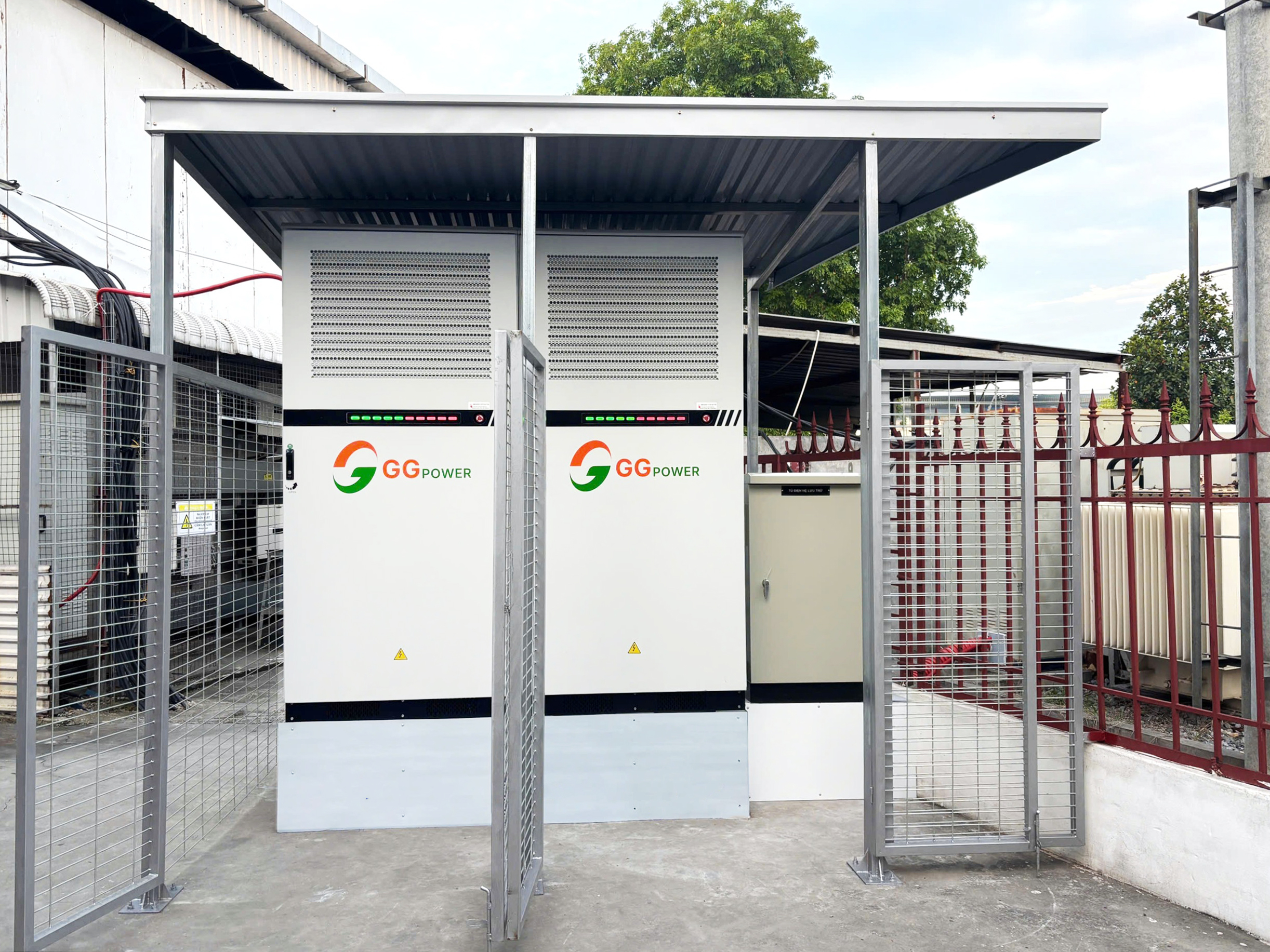
– Investors: Focus on system-support services (energy storage, smart dispatch) and offshore wind supply chains.
– Compiled and analyzed based on data available through December 2025.
By Dr. Nguyen Anh Tuan (B)
Scientific Council – Vietnam Energy Magazine