1. Project Overview
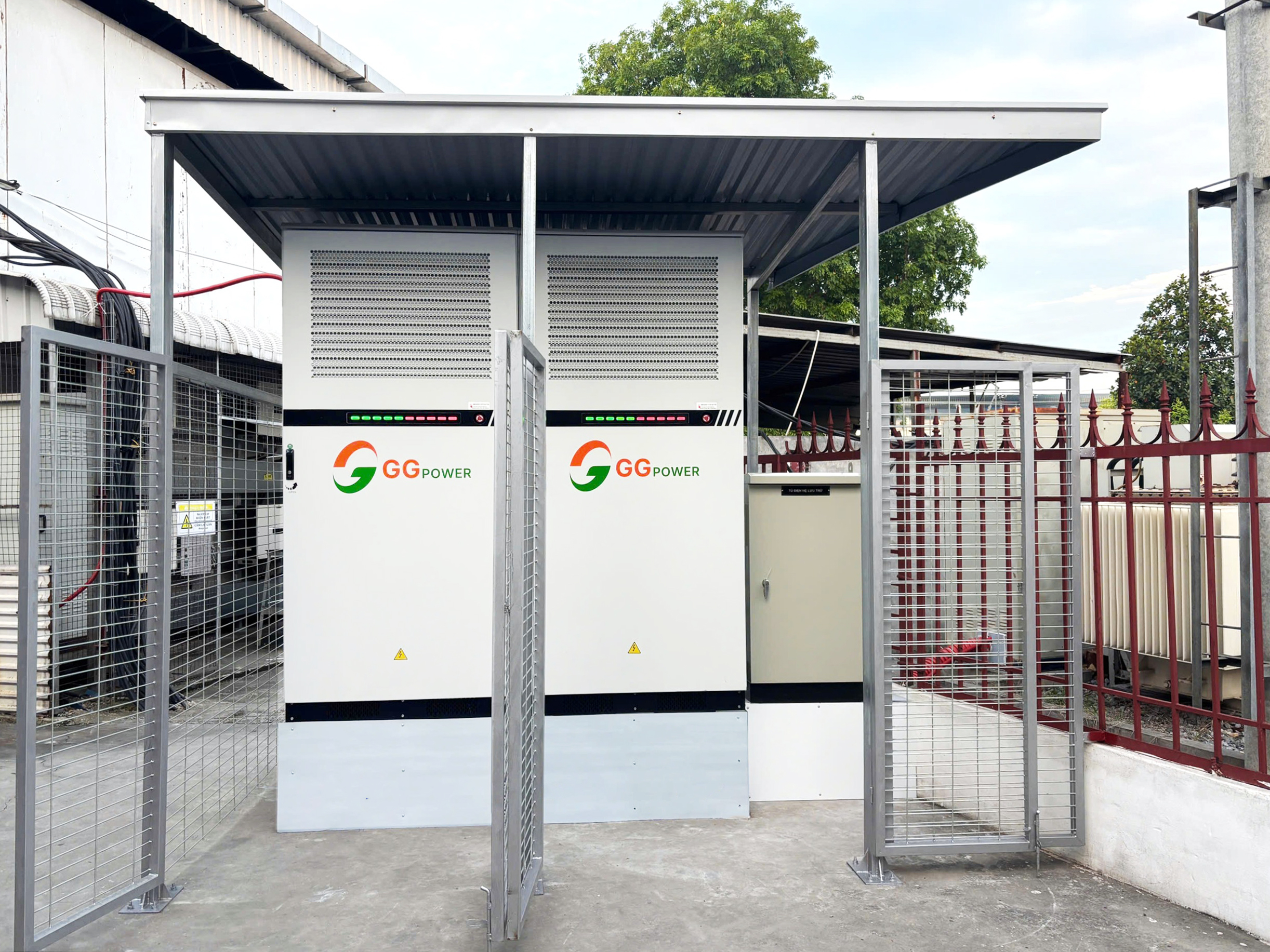
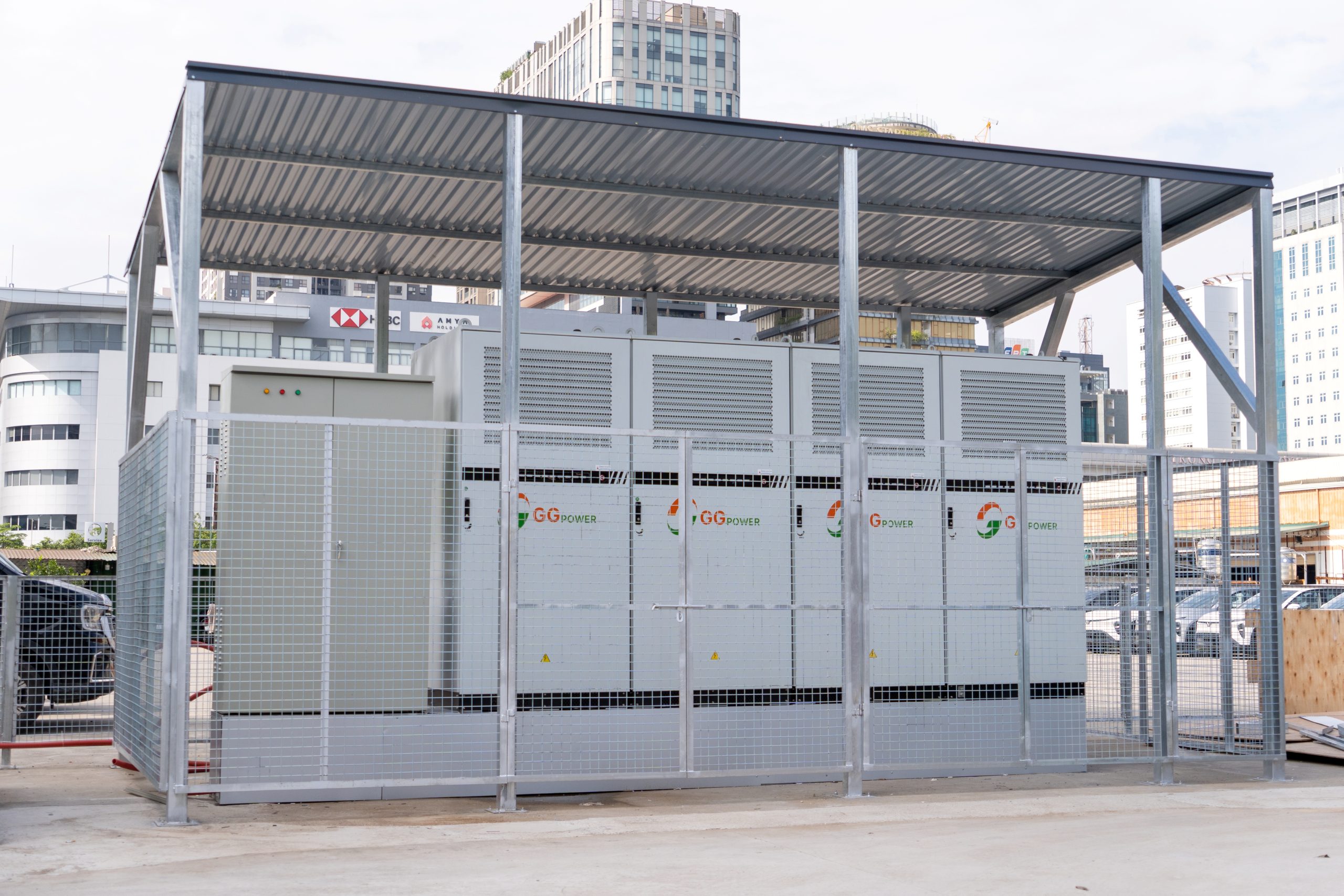
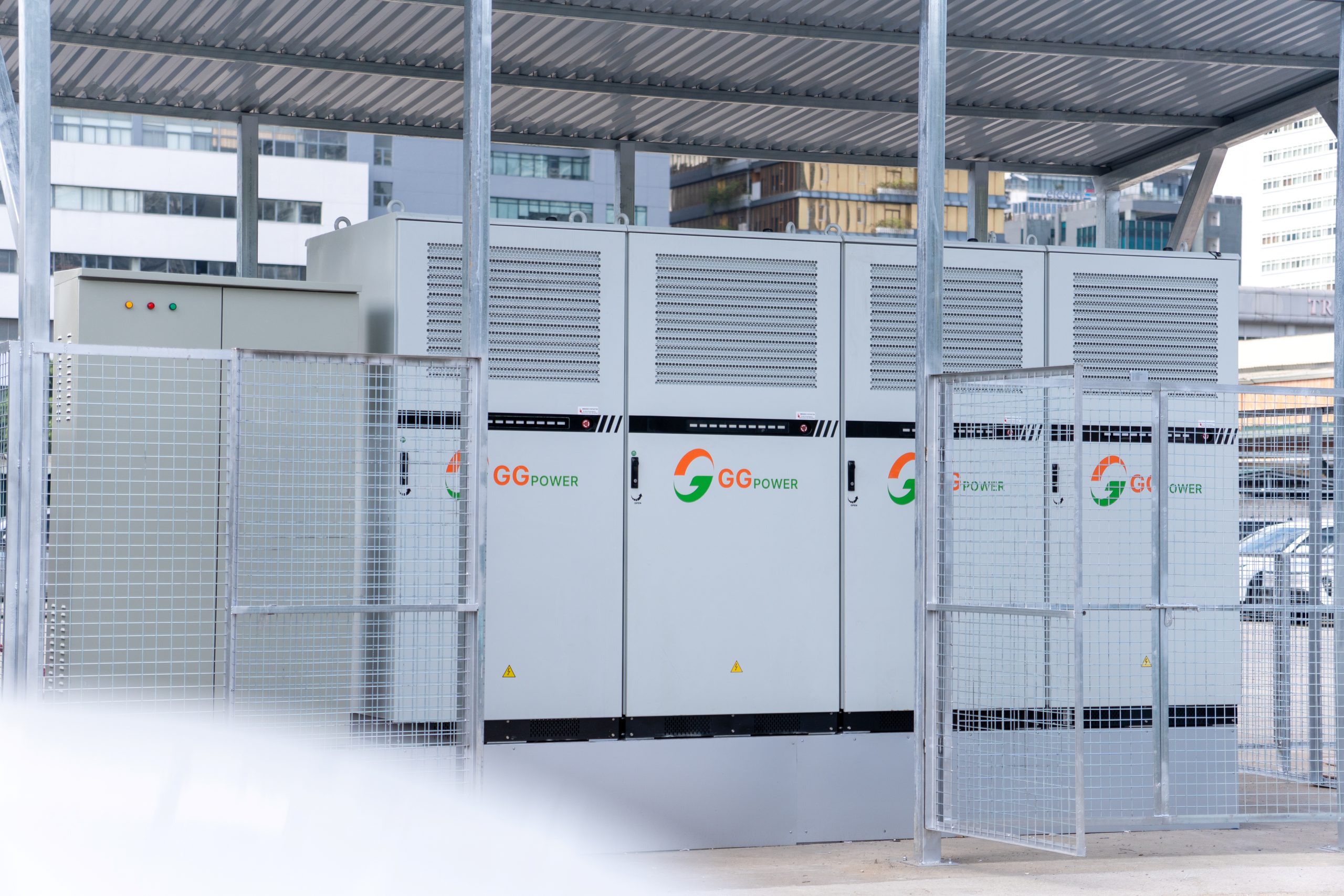
Project Name: Four 261 kWh BESS Systems at ICD My Dinh EV Charging Station
Location: My Dinh, Hanoi, Vietnam
Implementation Period: May 2026
Project Developer: GG Power
2. Project Objectives
- Support stable operation for large-scale EV charging infrastructure.
- Reduce grid load pressure during peak charging periods.
- Optimize electricity costs for continuously high-load operations.
- Enhance energy autonomy and overall operational stability for the EV charging infrastructure.
3. Key Technical Specifications
| Item | Details |
|---|---|
| System Capacity | 261 kWh |
| Battery Type | Li-ion (LFP) |
| PCS | 125 kW |
| Features | Bidirectional charge/discharge, intelligent EMS-based energy management |
| Monitoring System | Remote monitoring via IoT platform |
| Safety Protection | Integrated BMS, fire protection, circuit breaker, overvoltage protection |
4. Challenges & Solutions
Challenges
- Large-scale EV charging stations operate multiple DC chargers simultaneously, creating high and fluctuating power loads during peak charging periods.
- When many EVs charge at the same time, the system must maintain stable power delivery without placing excessive pressure on electricity costs or grid infrastructure.
- High requirements for system stability, operational continuity, and fast response capability in large-load operating environments.
Solutions
- Simultaneous deployment of four 261 kWh BESS systems to optimize operations for large-scale EV charging infrastructure.
- Integration of an intelligent Energy Management System (EMS) to coordinate power distribution and optimize real-time energy usage strategies.
- Customized energy storage design tailored to EV charging load characteristics, ensuring operational efficiency, stable power performance, and long-term electricity cost optimization.

5. Expected Outcomes
- Support stable operation for large-scale EV charging stations.
- Reduce grid load pressure during peak charging hours.
- Optimize electricity costs for continuously high-load operations.
- Enhance energy autonomy and operational reliability for the entire EV charging infrastructure.