The 5th Vietnam Clean Energy Forum, themed “Policy and Technological Solutions for Developing Energy Storage Systems and Industrial Solar Power in Vietnam,” was jointly organized by the Electricity and Renewable Energy Authority (Ministry of Industry and Trade) and the Vietnam Energy Association (VEA) in Ho Chi Minh City on November 7.
At the forum, Mr. Đào Hoàng Duy – Deputy General Director of Sales & Marketing at GG Industries – represented the company to deliver a presentation titled:“BESS 2025–2035: Global Trends and Vietnam’s Roadmap to Energy Independence.”
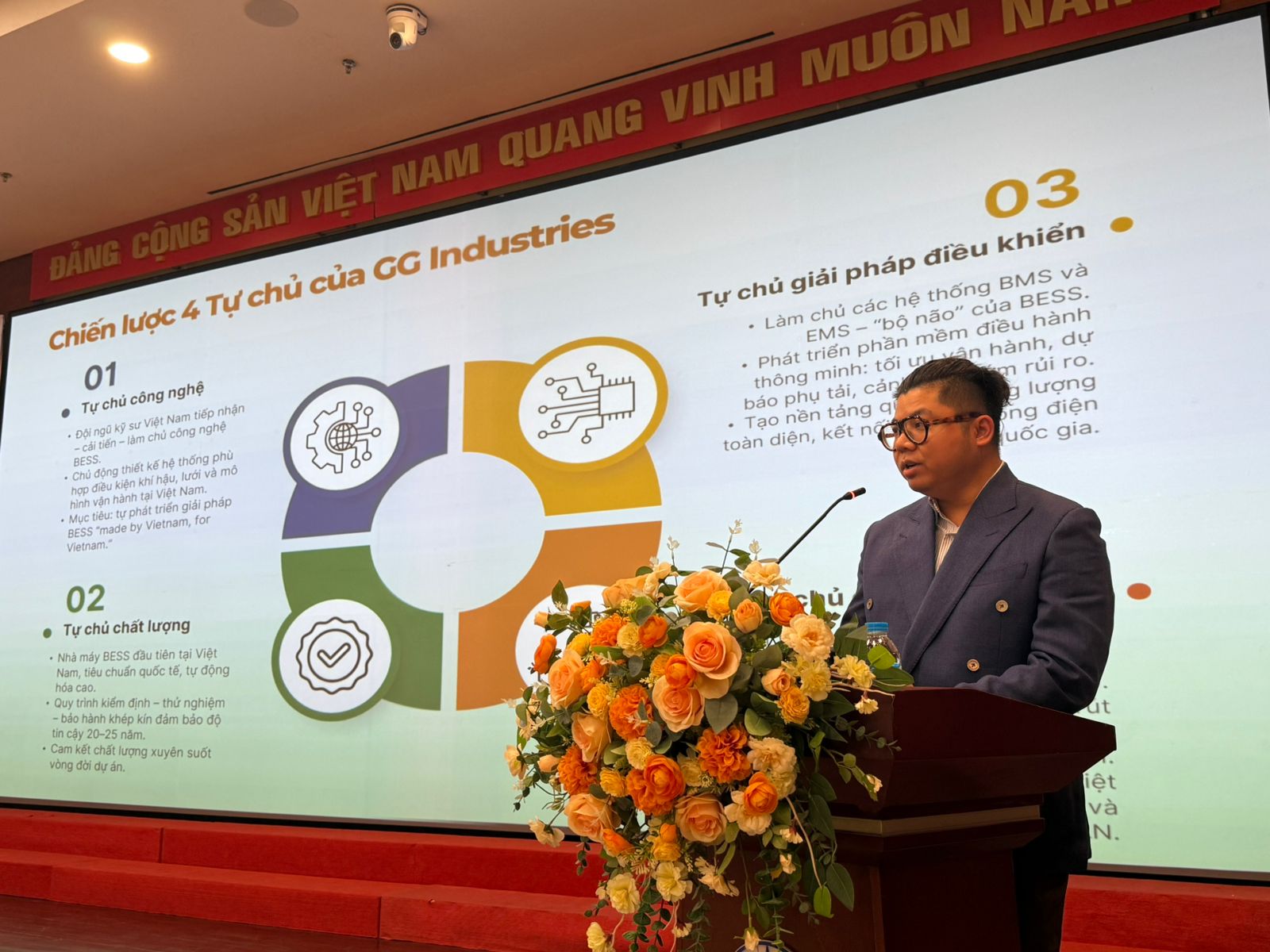
In his speech, Mr. Duy emphasized that Vietnam is entering a “golden decade” for the energy storage industry, as global BESS system costs have dropped by nearly 50% while maintaining an impressive annual growth rate of 14.7%.
With the issuance of Vietnam’s first national standards for BESS (TCVN) and the target of 10,000–16,300 MW of energy storage capacity by 2030 under Power Development Plan VIII (PDP8), Vietnam is well-positioned to become a regional hub for BESS technology and manufacturing in Southeast Asia.
Mr. Duy also shared GG Industries’ “Four Pillars of Autonomy” strategy, which includes:
1️⃣ Technological Autonomy – Mastering system design and integration.
2️⃣ Quality Autonomy – Establishing Vietnam’s first BESS factory meeting international standards.
3️⃣ Control Autonomy – Developing a safe and intelligent Energy Management System (EMS).
4️⃣ Supply Chain Autonomy – Achieving over 50% localization by 2026.
Guided by the vision “Make in Vietnam – Autonomy to Lead,” GG Industries reaffirms its commitment to advancing Vietnam’s green energy transition, positioning the country as a regional cradle of BESS innovation and opening new collaboration opportunities across the emerging clean energy value chain.

The forum brought together representatives from diplomatic agencies, international and domestic enterprises, and leading energy experts.
According to the organizing committee, the revised Power Development Plan VIII (PDP8) outlines Vietnam’s targets for energy storage development by 2030, including 2,400–6,000 MW of pumped-storage hydropower and 10,000–16,300 MW of battery energy storage systems (BESS) for wind and solar power centers or grid-level applications.
This total storage capacity will require substantial investment capital, while the impact of these costs on electricity pricing has not yet been fully studied.
Current pricing mechanisms for electricity purchase and sale related to energy storage systems remain insufficiently attractive. In parallel, technological advancements in battery storage, global trends in energy storage applications, and Vietnam’s goals for technology localization and circular economy development present both opportunities and challenges. These require appropriate mechanisms and policies from national energy regulators to accelerate the growth of this sector.
In his opening remarks, Mr. Nguyen The Huu – Deputy Director General of the Electricity and Renewable Energy Authority (Ministry of Industry and Trade), emphasized that as Vietnam strives to achieve its carbon neutrality commitment by 2050, and faces growing challenges from the energy transition and the increasing share of intermittent renewable sources such as wind and solar power, battery energy storage systems (BESS) are emerging as a foundational and breakthrough technological solution.
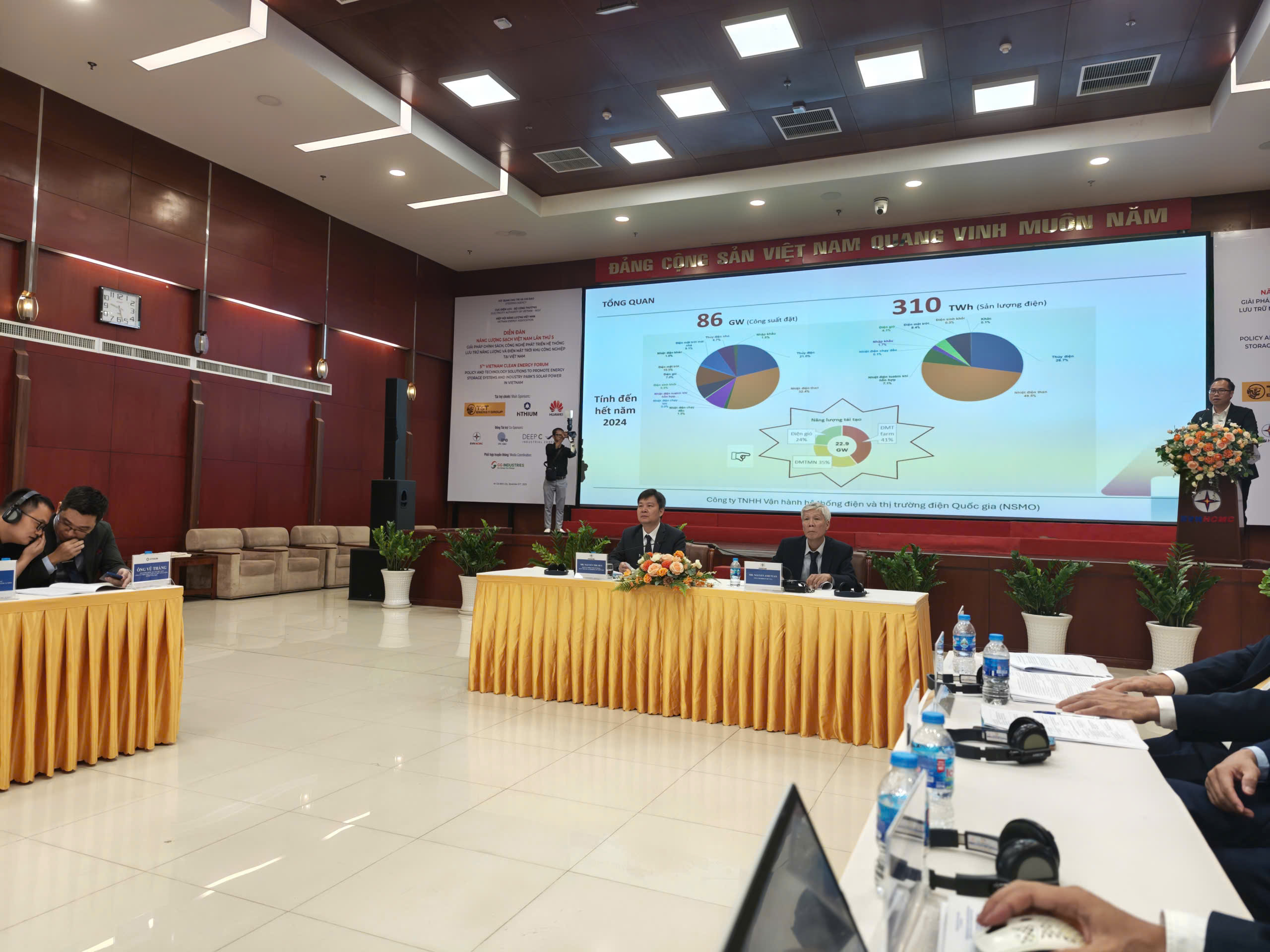
Energy storage systems not only support power balancing, frequency regulation, voltage control, black start capability, and system inertia, but also play a vital role in reducing grid congestion, flattening load curves, and enhancing the efficient utilization of renewable energy sources.
During the forum, participants discussed and exchanged insights on topics such as the overview of energy storage systems in Vietnam’s energy transition—their roles, challenges, and policy and technological solutions for development—as well as the integration of battery storage systems and solar power for industrial parks, focusing on expansion potential, investment costs, and technology solutions for the 2025–2035 period.
Source: laodong.vn