1. Project Overview
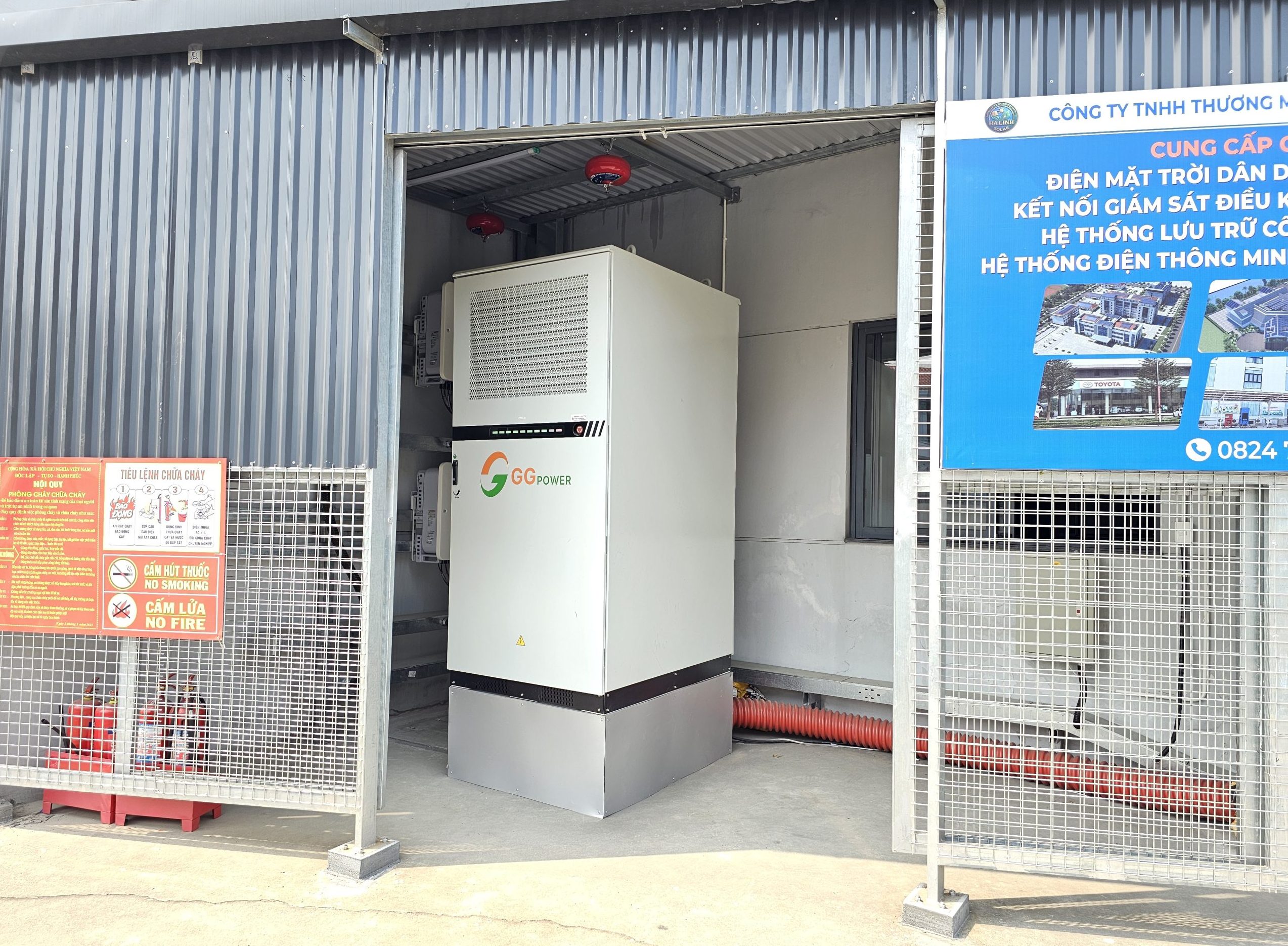
Project Name: Deployment of a 261 kWh BESS system integrated with a 300 kWp solar power system at the Toyota showroom.
Location: Viet Tri, Phu Tho.
Implementation Timeline: January 2026.
Executing Unit: GG Power.
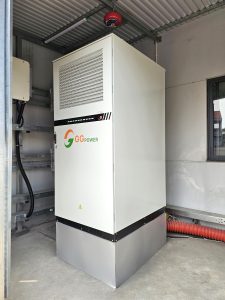
2. Project Objectives
-
Optimize energy utilization from the rooftop solar system integrated with BESS.
-
Reduce electricity costs through peak shaving during peak demand hours..
-
Ensure a stable power supply for critical loads within the showroom.
-
Move toward a green, smart, and sustainable energy operation model for Toyota using solutions from GG Power.
3. Key Technical Specifications
| Item | Details |
|---|---|
| Rated Energy | 261 kWh |
| Battery Type | Li-ion (LFP) |
| PCS | 125 kW |
| Features | Bi-directional charging/discharging, smart management via EMS |
| Monitoring System | Remote monitoring via IoT platform |
| Safety Protection | Integrated BMS, fire prevention, short-circuit protection, overvoltage protection |
4. Challenges & Solutions
-
Challenges:
-
Showroom power demand fluctuates significantly during peak hours.
- Effective integration of the rooftop solar system with the energy storage system.
-
Ensuring a stable power supply for critical loads within the showroom.
-
-
Solutions:
-
Deployment of a 125 kW / 261 kWh BESS integrated with a 300 kWp solar system.
- Application of Peak Shaving to optimize power usage during peak hours.
-
Integration of an Energy Management System (EMS) for intelligent power dispatch.
-
Design of two priority load outputs to ensure continuous operation.
-
5. Expected Results
-
Reduce electricity costs through optimized system operation and peak shaving.
-
Ensure stable capacity during peak hours without interruption.
-
Reduce pressure on the local power grid during peak demand periods.