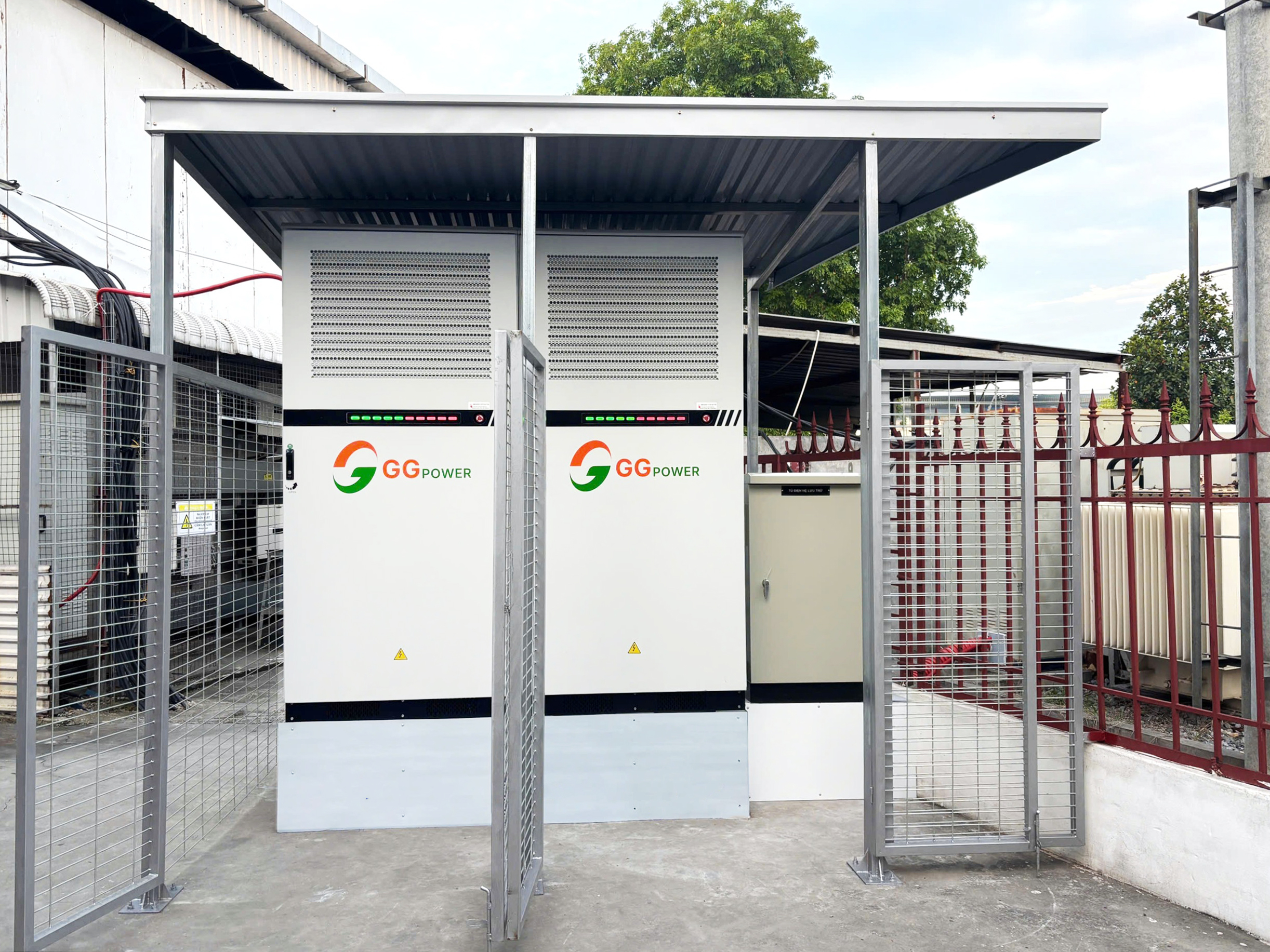
Battery Energy Storage System (BESS) solutions enable businesses to transition from traditional diesel generator operation to a green hybrid power model — reducing fuel costs, cutting emissions, and improving operational efficiency.
In many industrial zones, remote areas, or construction sites where grid infrastructure is still under development, diesel generators remain the primary source of electricity.
However, total reliance on diesel brings significant challenges: high fuel costs, large emissions, and frequent maintenance requirements.
As Vietnamese enterprises move toward Net Zero goals and higher ESG standards, integrating BESS with diesel generators is becoming an essential step.
This hybrid model not only reduces fuel consumption but also optimizes energy efficiency and lowers CO₂ emissions — paving the way toward a Green Hybrid future.
Limitations of the Conventional Diesel Model
Diesel generators are easy to deploy, provide instant power, and can operate under various conditions.
However, operating solely on diesel presents several long-term limitations:
-
High fuel costs due to continuous operation.
-
Low efficiency, as generators often run below optimal load.
-
Significant CO₂ emissions and noise, impacting both the environment and workers’ health.
-
High maintenance and replacement costs, especially in 24/7 operations.
-
Incompatibility with green operation standards, making it harder to meet the environmental requirements of international partners.The Green Hybrid Model – Combining BESS and Diesel Generators
1. How It Works
In a Hybrid System, the Battery Energy Storage System (BESS) is integrated with diesel generators — and optionally, renewable sources such as solar PV.
BESS stores excess energy during low-load periods and supplies power during peak demand.
When the battery charge is low, the generator automatically starts to supply power while recharging the BESS.
With a smart Energy Management System (EMS), the operation is automatically optimized so that the generator only runs when necessary — minimizing fuel use and wear.
2. Key Benefits
-
Reduce generator run time, significantly saving on fuel.
-
Optimize energy efficiency, minimizing operational losses.
-
Extend generator lifespan by reducing low-load operation cycles.
-
Lower noise and emissions, improving the working environment.
-
Easily expandable when integrating renewable energy sources in the future.
Comparison: Diesel-Only vs. Green Hybrid Models
| Criteria | Diesel-Only Model | Hybrid (Diesel + BESS) |
|---|---|---|
| Operation | Generator runs continuously to meet load | BESS coordinates with generator, which runs only when needed |
| Energy Efficiency | Low, with fuel waste | High, operates at optimal load |
| Fuel Consumption | High | Significantly reduced |
| Equipment Lifespan | Shorter due to wear | Longer, fewer operation cycles |
| Emissions & Noise | High | Substantially reduced |
| Maintenance | Frequent | Less frequent and lower cost |
| Renewable Integration | Limited | Easily expandable |
| Net Zero Compliance | Not achievable | Strongly supportive |
The Role of BESS in Net Zero and ESG Strategies
-
Reduce direct emissions (Scope 1): Lower fuel consumption and generator exhaust.
-
Enhance overall energy efficiency: Enable stable, optimized load operation.
-
Support ESG tracking and reporting: BESS data can be integrated into corporate energy management systems.
-
Strengthen corporate sustainability image: Demonstrate commitment to clean energy and responsible operations.
Conclusion
Transitioning from a diesel-only model to a Green Hybrid system is not only a cost-saving measure but also a strategic move toward achieving Net Zero targets.
With proven experience in end-to-end BESS consulting and implementation, GGI supports businesses in Vietnam on their journey toward building flexible, sustainable, and intelligent energy systems — contributing to national emission reduction goals and a comprehensive green transition.