According to the Office of the National Assembly, the 10th Session of the 15th National Assembly will officially commence on October 20, 2025.
To support National Assembly delegates in updating key reference information during discussions and contributions to draft Laws and Resolutions related to the power sector, the Scientific Council of Vietnam Energy Review has completed its report titled:
“Identifying Risks, Challenges, and Policy Recommendations for the Development of Vietnam’s Power Sector” (October 2025).
Below is a summary of the main findings (Part 1). The Council welcomes feedback and insights from National Assembly delegates, government officials, experts, and readers
I. Current Challenges
The Power Development Plan for the 2021–2030 period, with a vision to 2050 (PDP VIII), was approved by the Prime Minister on May 15, 2023, setting out clear goals and a roadmap for Vietnam’s energy transition, especially for the period to 2030.
Following the April 2025 revision of PDP VIII, new policies and mechanisms have been introduced, including frameworks for electricity pricing and investment incentives, with the expectation of attracting large-scale investment in power generation—particularly renewable energy projects.
However, most generation projects remain behind schedule. Many large projects have yet to select investors, commence construction, or sign power purchase agreements (PPAs). Consequently, achieving the targets and timelines remains a significant challenge.
Key issues include:
1. Large Investment Volume and Limited Implementation Capacity
The number of projects requiring investment is substantial—especially LNG-to-power and renewable energy projects—while the remaining timeframe to 2030 is only about five years.
Persistent bottlenecks exist in bidding procedures for investor selection and procurement, compounded by limited technical capacity at the provincial level. Regulatory ambiguity in investor selection further complicates project implementation, as the current legal framework does not fully reflect the characteristics of power sector projects.
2. Investment Capital Constraints
The total investment required for the power sector under the PDP VIII is exceptionally large.
Given that public capital accounts for only a modest share, the sector will rely heavily on private investors and international capital markets. This dependency introduces financing risks and underscores the need for transparent and attractive investment mechanisms.
3. Absence of Key Policy Mechanisms
A number of critical mechanisms remain incomplete or absent, including:
-
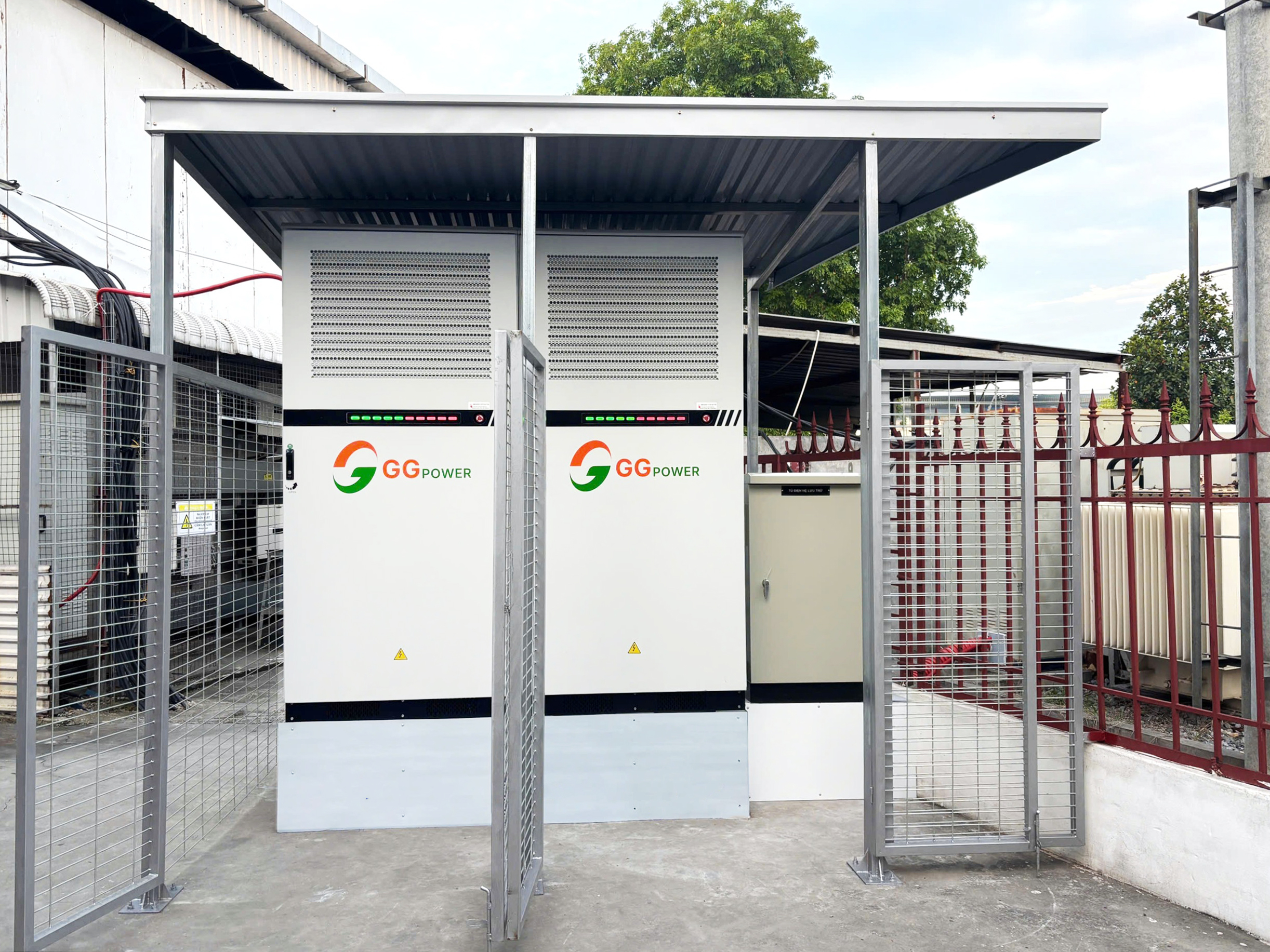
Pricing frameworks for energy storage systems (BESS) and flexible power sources.
-
Standard PPA templates for renewable projects with integrated battery storage.
-
Capacity-based tariffs separated from energy-based tariffs.
-
Regulations governing the transfer of gas offtake obligations (take-or-pay) into PPAs.
-
Policies on project buyout or compensation in the event of early termination not caused by the investor.
-
Legal provisions for force majeure protection for investors.
-
Clarity on participation in the competitive electricity market for power sources under PDP VIII.
4. Lack of Technical Standards and Supporting Regulations
The absence of specific standards and regulations continues to delay project development in emerging segments, particularly energy storage and offshore wind. These include:
-
National technical standards for battery energy storage systems (BESS).
-
Safety, environmental, and fire protection regulations for BESS projects.
-
Rules governing marine surveys for offshore wind projects.
-
Procedures defining whether marine surveys must be conducted before or after investment approval for offshore wind projects.
-
Lack of model PPAs for offshore wind farms connected to the national grid
II. General Policy Recommendations
Based on the analysis of current challenges, the Scientific Council proposes a number of cross-cutting recommendations aimed at improving the effectiveness of power sector development, enhancing investment attractiveness, and ensuring energy security.
1. Strengthen the Legal and Regulatory Framework
-
Accelerate the revision and synchronization of relevant legal documents—including the Electricity Law, the Law on Investment, and guiding decrees—to ensure consistency across mechanisms for investor selection, project approval, and electricity pricing.
-
Develop a special regulatory framework for power and energy projects, recognizing their national significance, technological complexity, and capital intensity.
-
Allow for pilot implementation mechanisms for new technologies such as offshore wind, hydrogen, and battery energy storage (BESS), accompanied by clear monitoring and evaluation procedures.
2. Establish Transparent and Predictable Investment Policies
-
Introduce long-term power purchase mechanisms (20–25 years) with stable pricing formulas, particularly for renewable and LNG-to-power projects.
-
Develop a comprehensive policy package for private investment, covering taxation, land use, grid connection, and financing guarantees.
-
Enhance state capacity for risk sharing through sovereign guarantees or risk mitigation facilities, especially in the early stages of large-scale and capital-intensive projects.
3. Mobilize Diverse Financial Resources
-
Encourage participation of domestic commercial banks by allowing more flexible credit limits for energy infrastructure projects with proven feasibility.
-
Attract foreign direct investment and green finance through improved transparency, adherence to international standards (ESG), and the adoption of green taxonomy principles.
-
Establish a Green Investment Promotion Fund dedicated to clean energy, grid modernization, and storage infrastructure.
4. Strengthen Institutional Coordination
-
Clearly assign responsibilities among ministries and local authorities for planning, investor selection, and project supervision.
-
Create a centralized coordination unit under the Prime Minister’s Office to oversee the implementation of PDP VIII and resolve cross-sectoral bottlenecks.
-
Require regular progress reporting and a transparent national database on power projects, enabling timely monitoring and public accountability.
5. Develop Human Resources and Technology Transfer
-
Formulate training programs for local engineers and technicians, with emphasis on renewable energy integration, storage systems, and grid operation.
-
Encourage technology partnerships between Vietnamese enterprises and international technology providers.
-
Support R&D initiatives on energy storage, power electronics, and smart grid applications.
III. Sector-Specific Solutions
1. Renewable Energy
-
Continue to expand renewable generation capacity in alignment with PDP VIII, prioritizing solar, onshore wind, and offshore wind.
-
Design bidding mechanisms or fixed-price auctions with clear schedules to ensure transparency and price competitiveness.
-
Allow hybrid models (e.g., solar + BESS, wind + BESS) to improve grid stability and optimize resource utilization.
-
Issue technical standards for grid connection, forecasting, and curtailment management for renewable power plants.
2. LNG-to-Power Projects
-
Urgently finalize the legal basis for take-or-pay gas supply contracts and their integration into PPAs.
-
Standardize LNG infrastructure planning (terminals, pipelines, storage) to reduce overlapping investments.
-
Develop capacity-based pricing mechanisms to ensure cost recovery for projects operating in partial-load conditions.
-
Consider state participation or guarantees for large-scale LNG terminals critical to national energy security.
3. Coal Power Transition
-
Restrict development of new coal-fired projects except those already in advanced stages.
-
Develop a phased retirement plan for existing coal units, supported by carbon transition financing and retraining programs for affected workers.
-
Encourage conversion of suitable plants to biomass or ammonia co-firing where technically and economically feasible.
4. Transmission and Grid Infrastructure
-
Prioritize investment in transmission lines and substations in regions with high renewable potential (Central and Southern provinces).
-
Enable private participation in transmission development under transparent regulatory supervision.
-
Implement smart grid technologies and digital management systems to enhance reliability and integration of distributed generation.
5. Energy Storage (BESS)
-
Develop a national roadmap for battery energy storage deployment, including technical standards, safety regulations, and fire prevention protocols.
-
Establish a pricing framework for storage services—covering capacity, energy arbitrage, and ancillary services (frequency regulation, peak shaving).
-
Encourage local manufacturing and assembly of BESS components through tax incentives and support for R&D.
-
Pilot co-location of BESS with renewable and diesel hybrid systems in remote or off-grid areas to enhance reliability and reduce fuel costs.
6. Off-Grid and Rural Electrification
-
Promote decentralized renewable microgrids and hybrid systems (solar, wind, BESS) for remote regions, islands, and industrial zones without stable grid access.
-
Provide targeted subsidies or concessional financing for rural electrification projects utilizing clean energy technologies.
-
Integrate off-grid electrification efforts into national energy planning to ensure coherence and scalability.
Conclusion
The development of Vietnam’s power sector in the coming decade will face unprecedented challenges in mobilizing capital, ensuring system stability, and achieving the dual goals of energy security and decarbonization.
To succeed, Vietnam must combine regulatory innovation, institutional coordination, and investment flexibility, while proactively embracing new technologies such as energy storage, smart grids, and offshore wind.
The Scientific Council of Vietnam Energy Review respectfully submits this report to the delegates of the 15th National Assembly, with the hope that these insights and recommendations will support evidence-based policymaking, foster sustainable growth, and ensure a resilient and modern power sector for the nation.